Mass spectrometry
There are multiple methods of mass spectrometry and ionization. However, most of these methods are not suitable for organometallic/elementorganic samples, since inert application methods and soft ionization are usually necessary. In these cases, the liquid injection field desorption ionization mass spectrometry (LIFDI-MS) method has proven effective. Samples are introduced through a capillary from a sealed vial with a septum, and the ionization method itself is one of the softest available. For more information on LIFDI-MS I recommend reading this website (external link).
Preparing samples
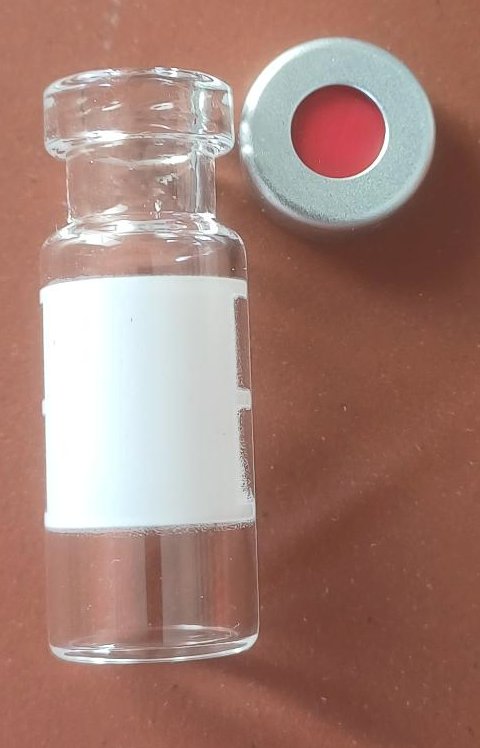
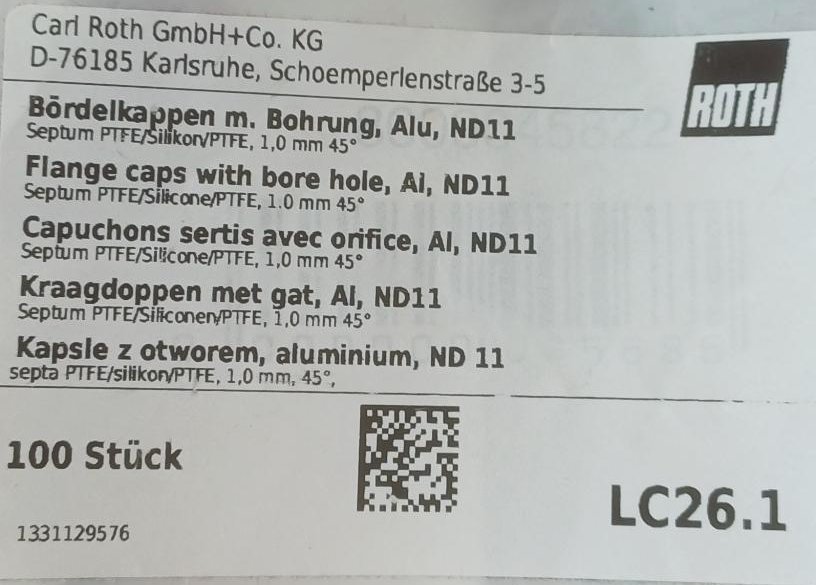
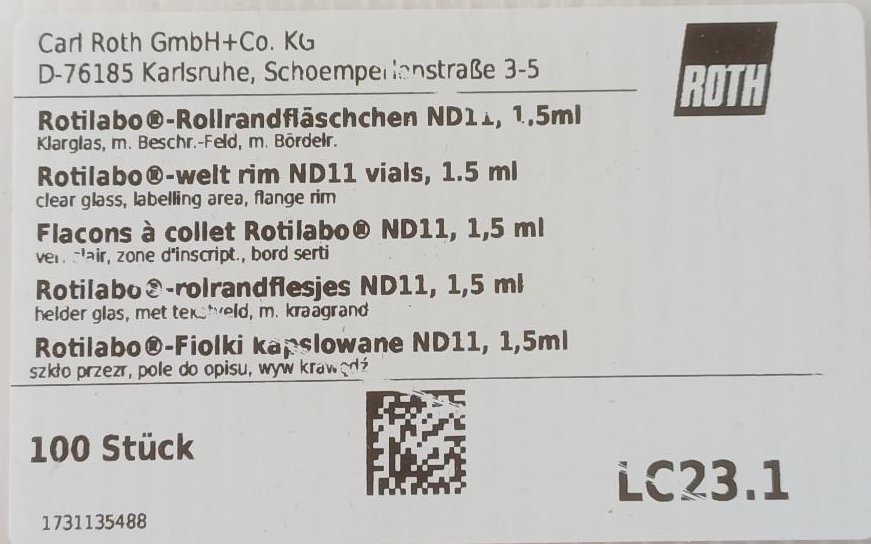
To prepare a sample in a glovebox I recommend using these small vials with a crimpable septum cap (Figure 1).
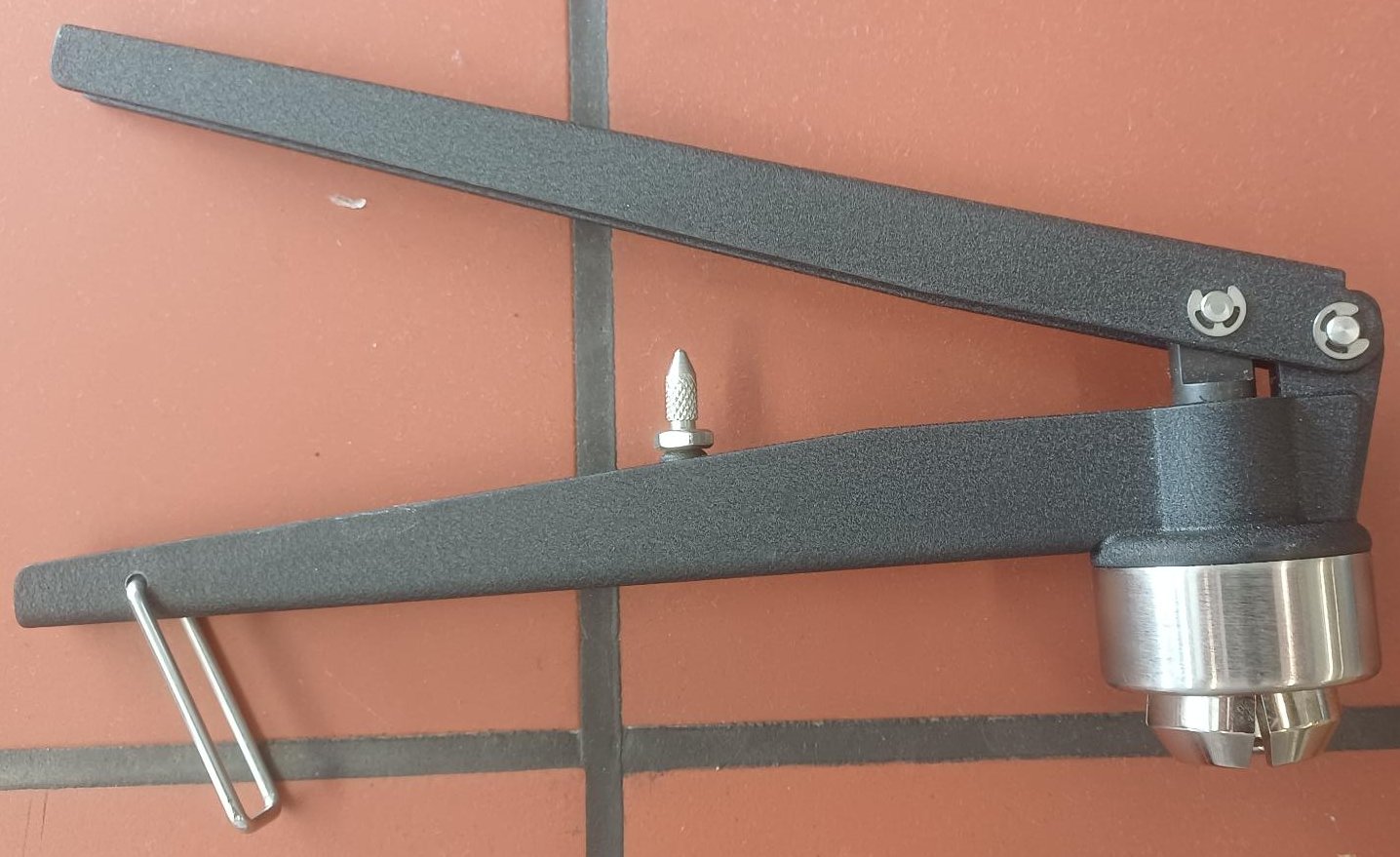
A crimp tool is also needed for the caps (Figure 2).
To prepare your sample, you must first prepare a solution of the substance. In most cases, toluene has proven to be an effective solvent. It has a high boiling point, which is necessary because solvents with lower boiling points may evaporate prematurely, leading to a clogged cannula. Some substances, especially polar ones, may not dissolve easily in toluene. In these cases, adding one to a few drops of fluorobenzene has proven helpful. Since this method is very sensitive, dissolving 1 mg of substance in 1 mL of solvent is more than enough. It is also good practice to first prepare the solution in another vial and then filter it into the actual vial to prevent residual solids from clogging the cannula.