Maintenance of the solvent filter
Introduction
A solvent filter is needed if solvents are handled inside a glove box to protect the reactor and other parts of the system. Some newer systems come with a molecular sieve filter. These filters can be regenerated and do not need to be replaced. However, most glove boxes use a solvent filter filled with activated carbon. This filter must be replaced when it becomes saturated with solvent. It is difficult to determine when this occurs, but when the antechamber starts to smell like solvent, it is already past due. Some systems use sensors to monitor the level of solvent fumes in the air. If the filter is external, it can also be weighed because its mass increases with saturation. One kilogram of activated carbon can hold approximately 100 grams of solvent. Best practice is to replace the loading every six months. Activated carbon comes in the form of pellets and can be purchased from glove box manufacturers or other stores, such as those that sell supplies for water purification systems (e. g. EcoSorb BXB 3 mm).
Bypassing the solvent filter
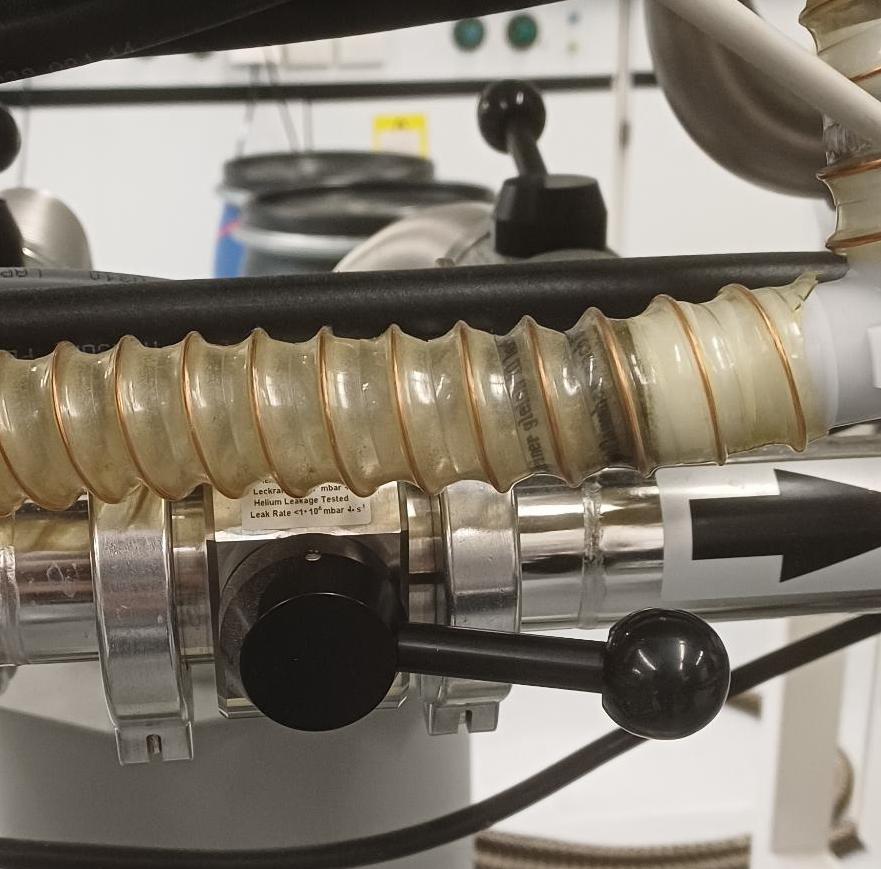
Before the filter opening the filter it needs to be taken out of the circulation. First the bypass for the solvent filter has to be opened (Figure 1). This is very important because if you close the valves towards the filter before you open the bypass the circulation will be interrupted which can damage the blower!
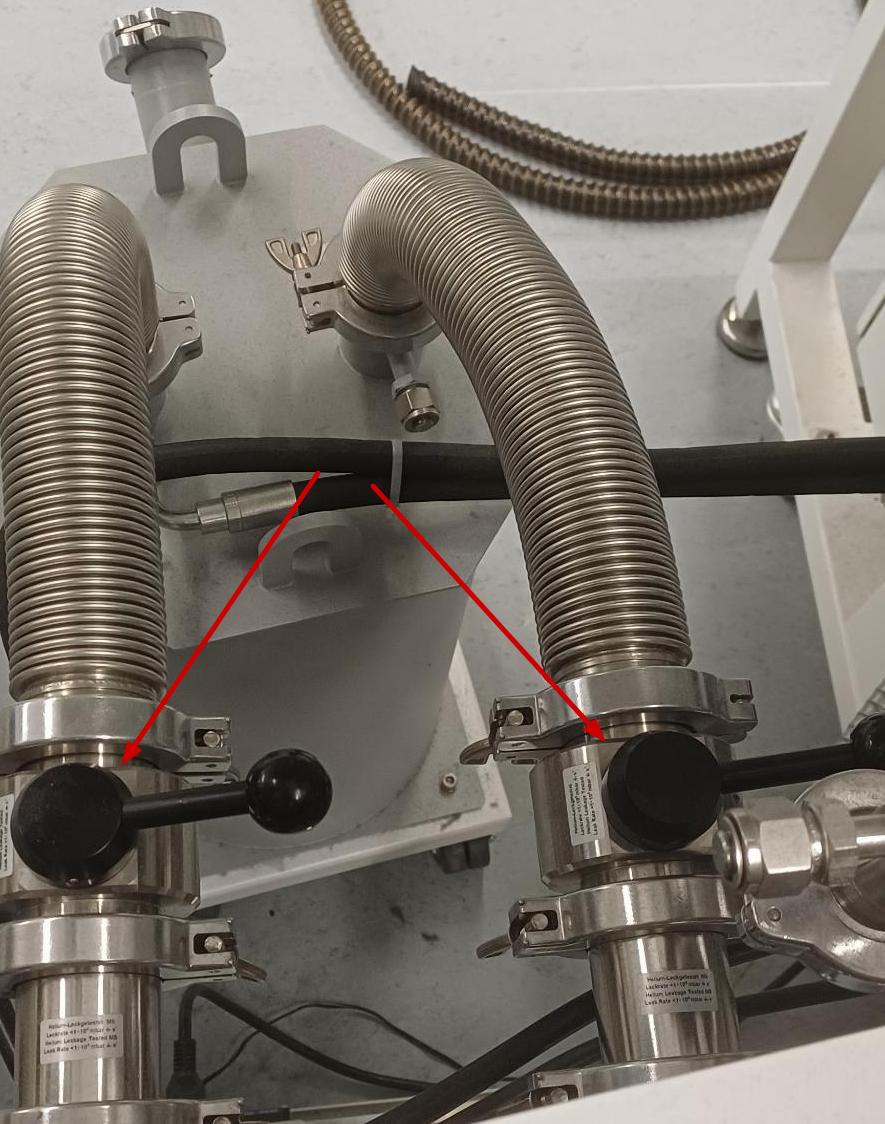
Next close the two valves at the filter to take it out of the circulation (Figure 2).
Replacing the activated carbon
The solvent filter housing has two flanges on the front. The lower flange releases the carbon pellets, and the upper flange is used for refilling. The traditional method is to place a flat, wide container under the lower flange to catch the pellets as they are released. To refill the filter, a funnel is needed to pour the new pellets through the upper flange. However, this method creates a lot of harmful dust, so respiratory safety equipment (e.g., an FFP2 mask) is required. With an external filter, it is also possible to disconnect it from the system, move it to a fume hood, and exchange the loading there. This method is more complex and time-consuming, though. Some people also use a vacuum cleaner to suck the pellets out of the filter. I strongly advise against this method because the pellets are saturated with solvents. In a vacuum cleaner, the air that is sucked in usually flows through the electrical motor after passing the filter bag to cool the motor. An electrical motor can produce sparks that can ignite a mixture of air and solvent fumes. This could cause the vacuum cleaner to explode. However there is an additional option.