Dies ist eine alte Version des Dokuments!
Liquids inside the glove box
Solvent usage is a core requirement in most synthetic chemistry disciplines, so introducing them into a glovebox environment is unavoidable, especially in organometallic chemistry. However, solvent fumes will damage the reactor and other parts of the glovebox over time, so a solvent filter is needed to protect the rest of the system. Even with a filter, it is best practice to limit the time the system is exposed to fumes while working.
Transferring liquids into the box
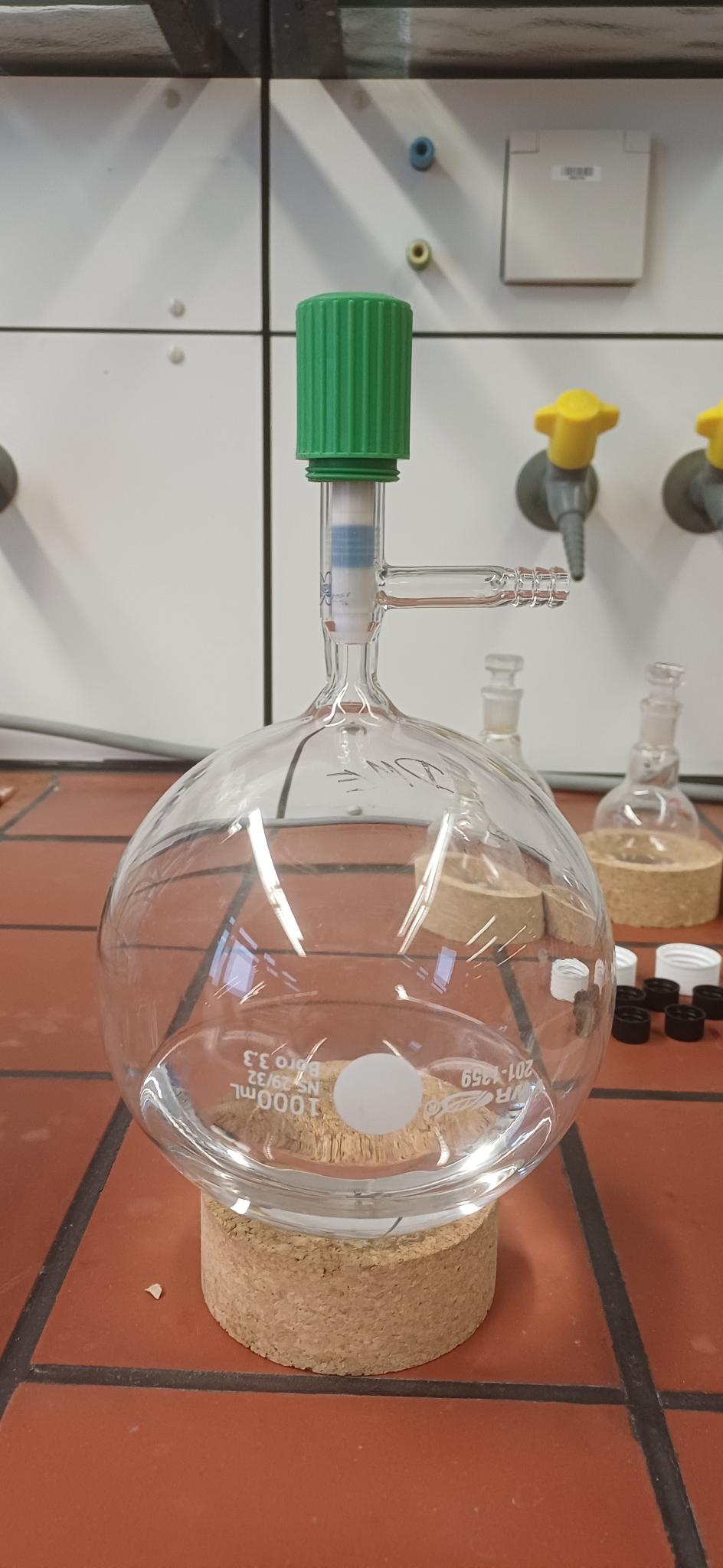
Large amounts of liquids, such as solvents, are best transferred into the box using a round-bottom flask equipped with a Young-type PTFE valve (Figure 1). Do not use regular flasks with standard glass stoppers, as they may not withstand the reduced pressure inside an evacuated antechamber, even if they are properly clamped.With the right type of flask (1 liter) and design, it should fit into modern small antechambers. Note that the antechambers used in older glovebox models are usually significantly smaller.
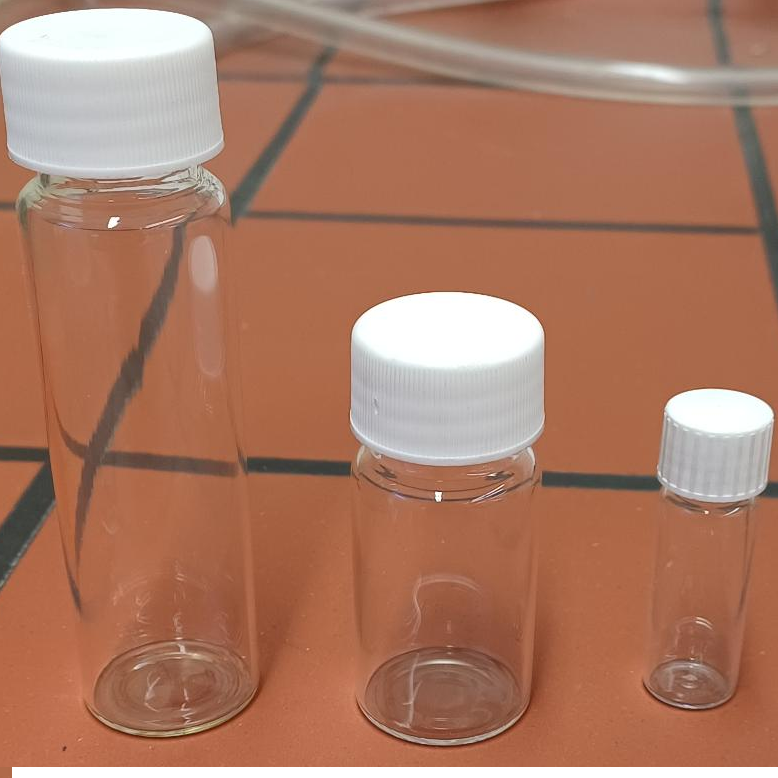
Smaller amounts of liquids (as well as solids, such as powders) can be transferred using different types of vials with screw caps (Figure 2). For this to work, the caps must have a rubber gasket and be tightly closed to withstand the pressure difference during the evacuation process. Use caps with a rubber gasket protected by a thin layer of PTFE foil to ensure the gasket's chemical resistance. Do not use snap-on caps, as they generally do not seal tightly.
Storing liquids inside a box
Larger amounts of liquids, such as solvents, are best stored in laboratory screw-top bottles (Figure 3). Proven suitable sizes are 500 mL, 250 mL, and 100 mL.
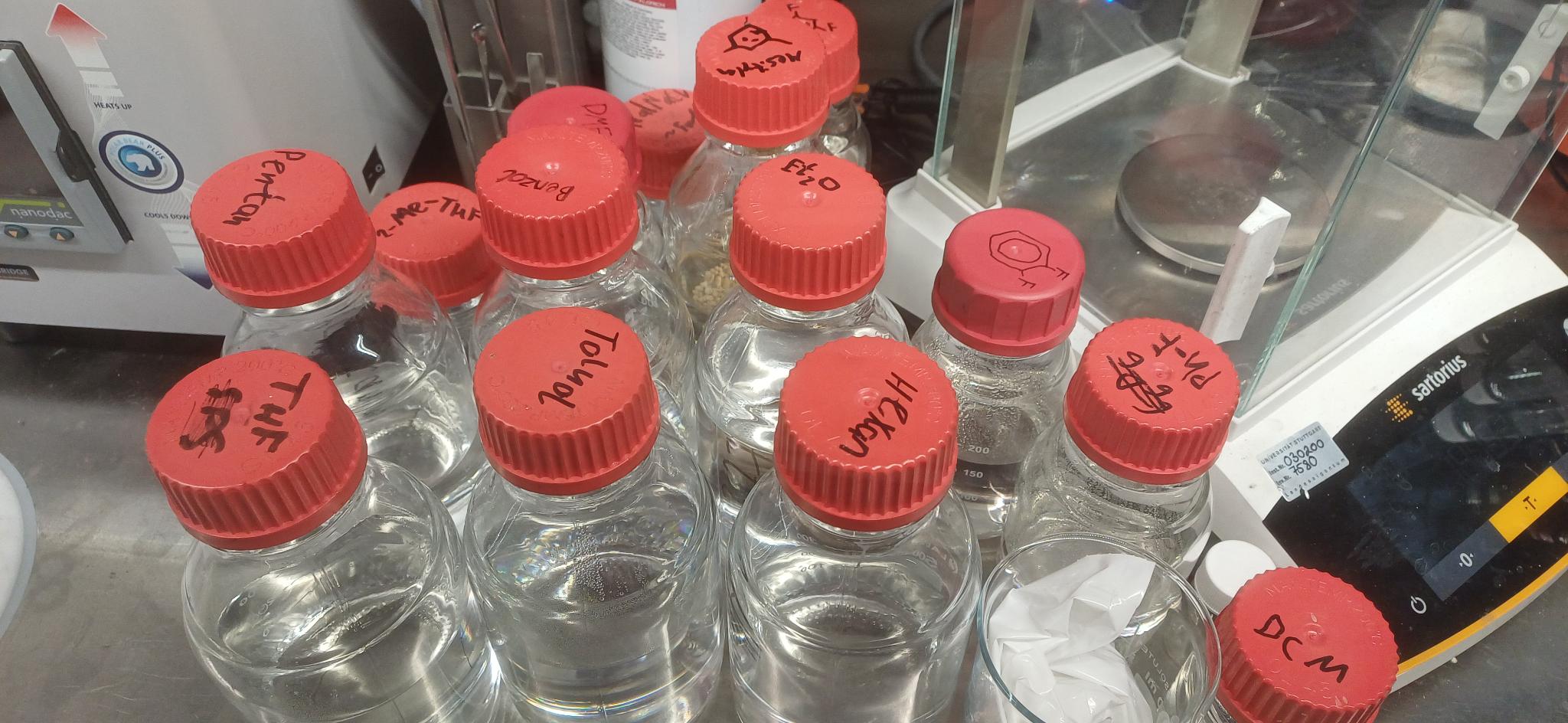
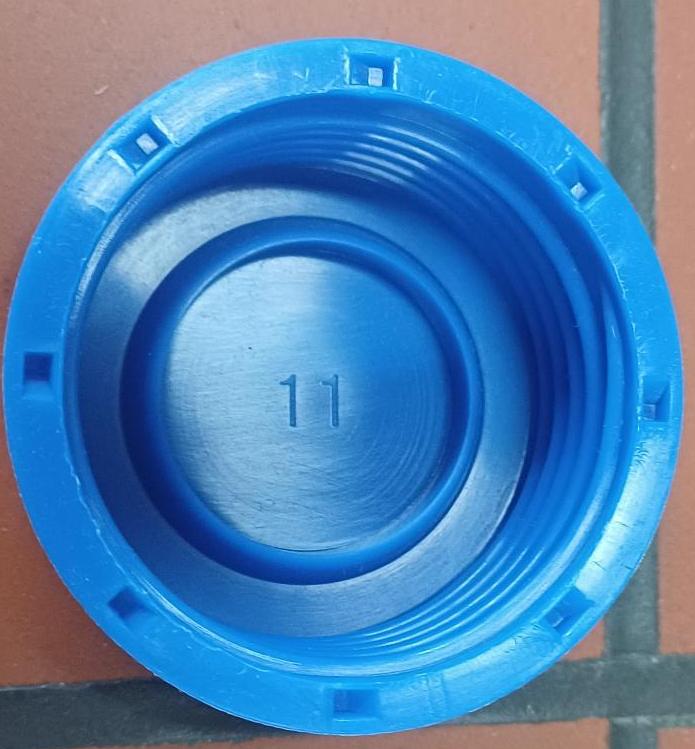
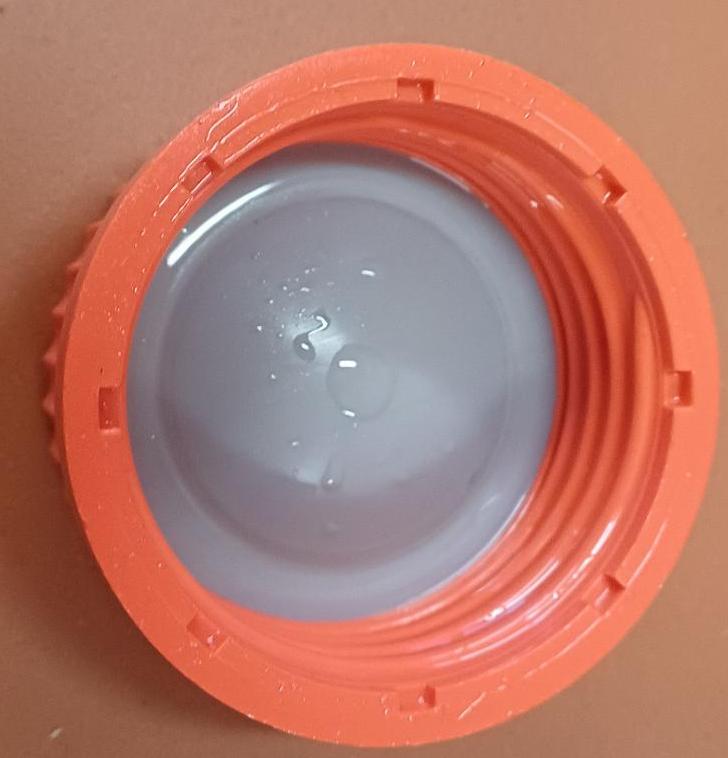
Note that there are different types of screw caps. Some may not have a gasket. These are unsuitable for a glovebox because they do not seal properly. Therefore, they constantly release small amounts of solvent fumes into the box atmosphere, which saturates the solvent filter prematurely and damages the system. Only use screw caps with a rubber gasket protected by a thin layer of PTFE foil.