Dies ist eine alte Version des Dokuments!
Maintenance of the solvent filter
Introduction
A solvent filter is needed if solvents are handled inside a glove box to protect the reactor and other parts of the system. Some newer systems come with a molecular sieve filter. These filters can be regenerated and do not need to be replaced. However, most glove boxes use a solvent filter filled with activated carbon. This filter must be replaced when it becomes saturated with solvent. It is difficult to determine when this occurs, but when the antechamber starts to smell like solvent, it is already past due. Some systems use sensors to monitor the level of solvent fumes in the air. If the filter is external, it can also be weighed because its mass increases with saturation. One kilogram of activated carbon can hold approximately 100 grams of solvent. Best practice is to replace the loading every six months. Activated carbon comes in the form of pellets and can be purchased from glove box manufacturers or other stores, such as those that sell supplies for water purification systems (e. g. EcoSorb BXB 3 mm).
Bypassing the solvent filter
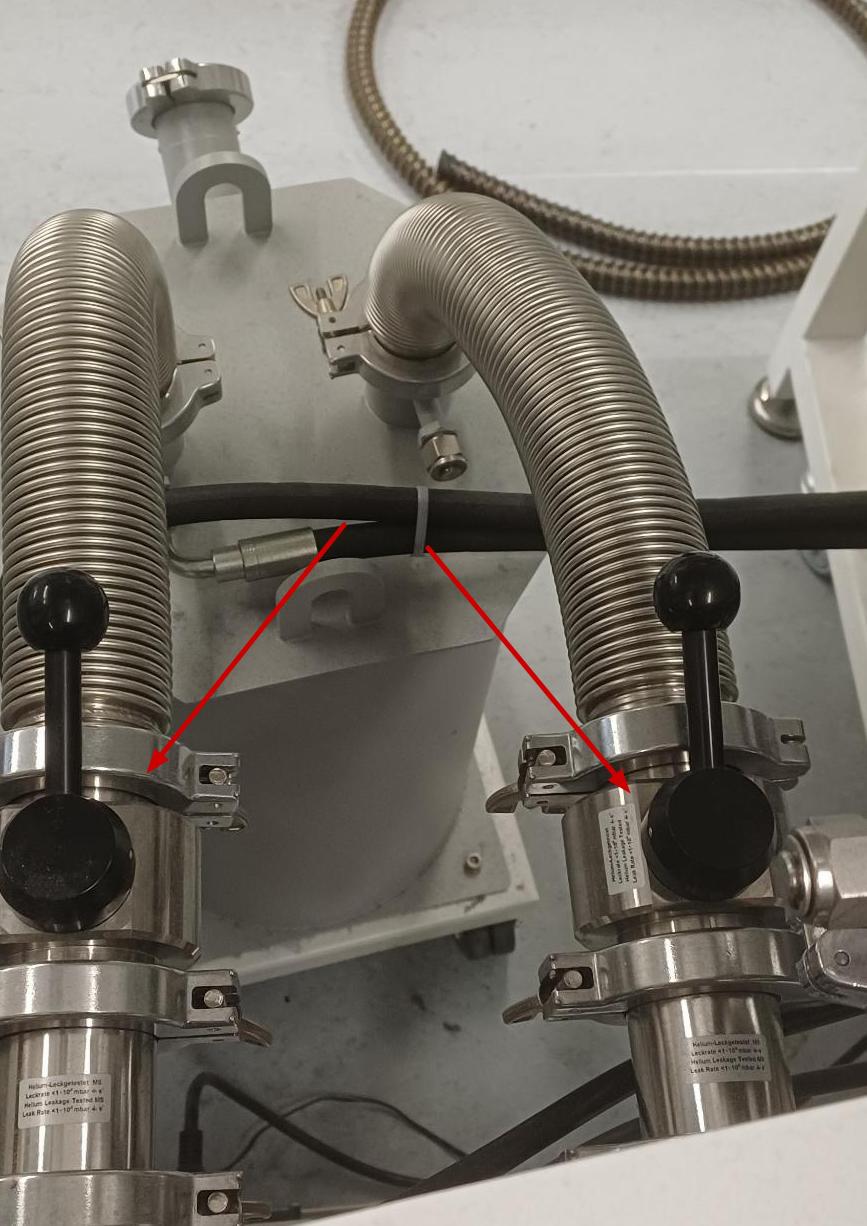
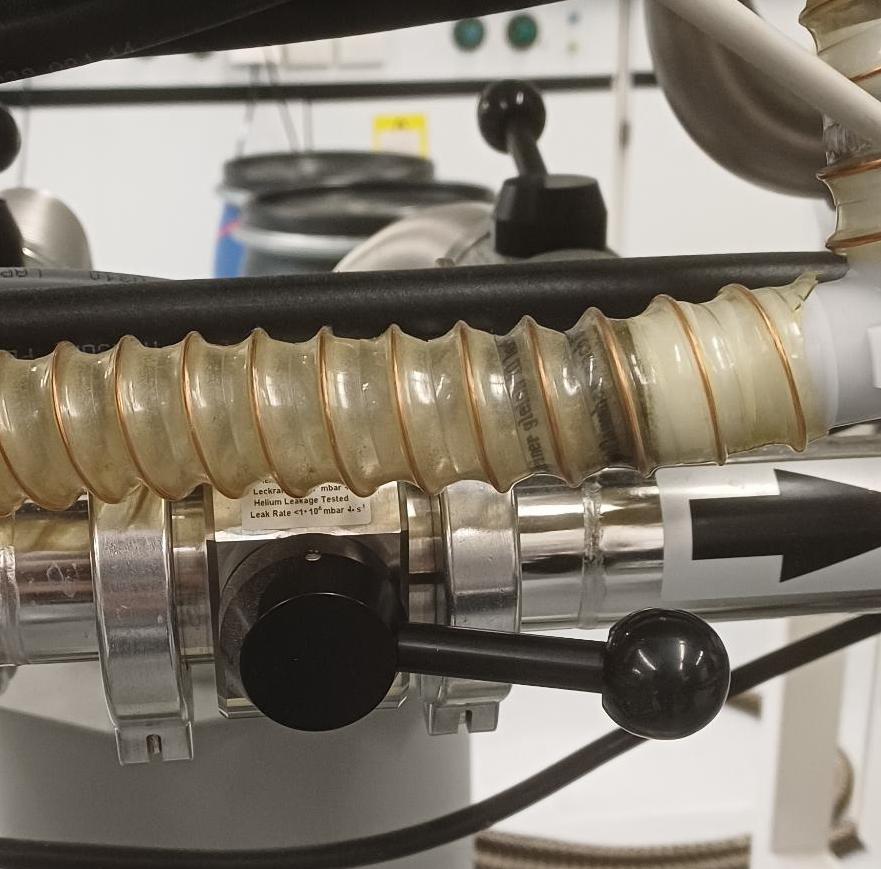
Before the filter opening the filter it needs to be taken out of the circulation. First the bypass for the solvent filter has to be opened (Figure 1). This is very important because if you close the valves towards the filter before you open the bypass the circulation will be interrupted which can damage the blower!
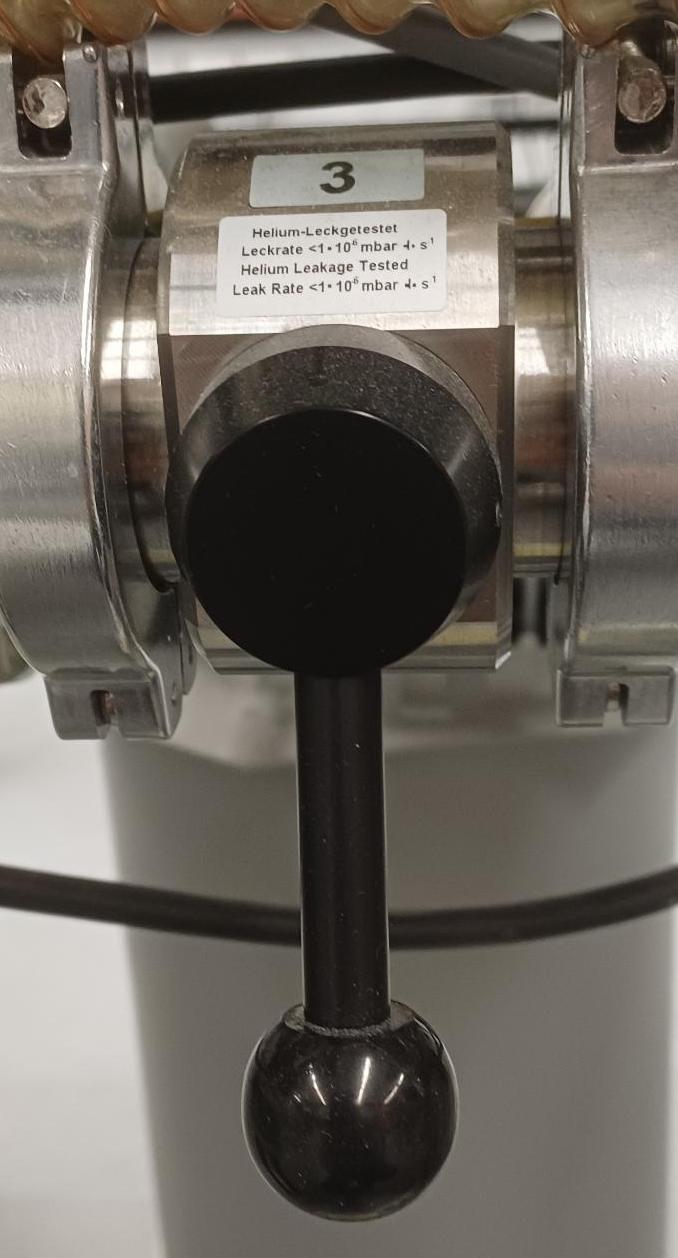
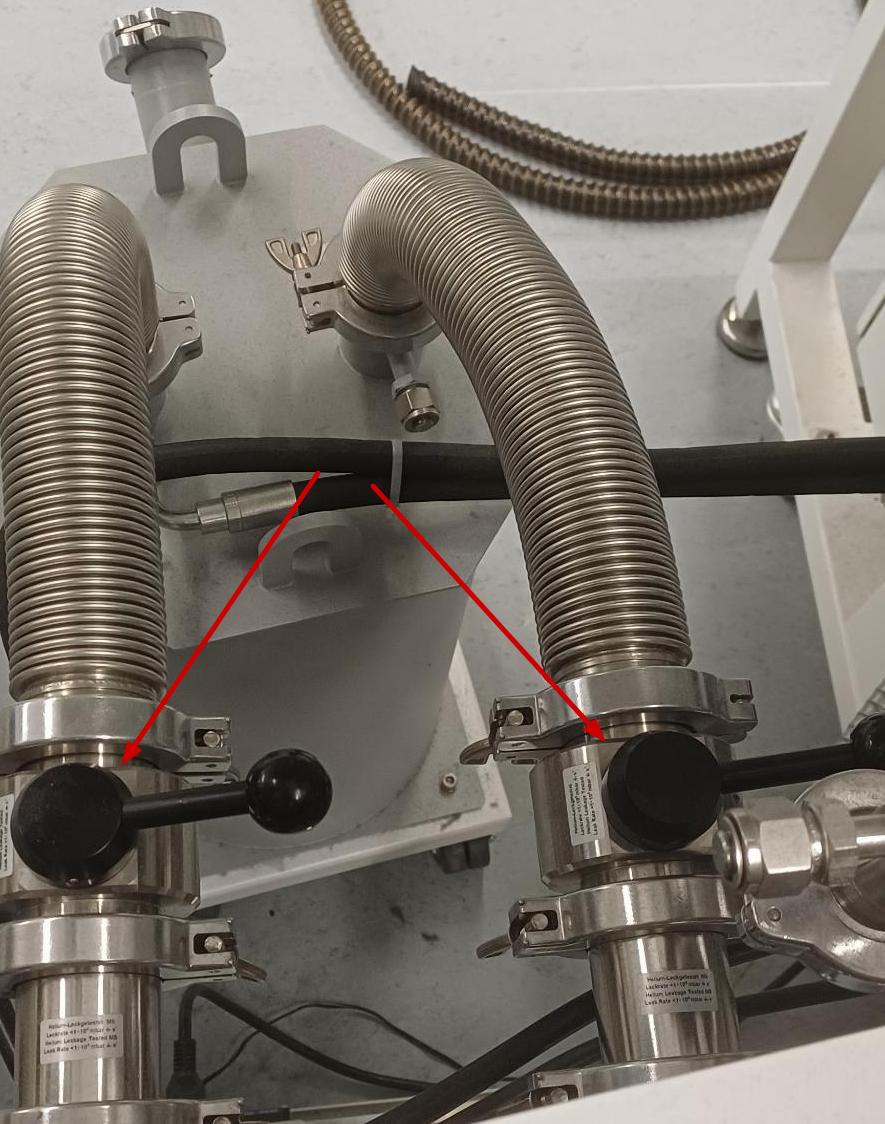
Next close the two valves at the filter to take it out of the circulation (Figure 2).
Replacing the activated carbon
The solvent filter housing has two flanges on the front. The lower flange releases the carbon pellets, and the upper flange is used for refilling. The traditional method is to place a flat, wide container under the lower flange to catch the pellets as they are released. To refill the filter, a funnel is needed to pour the new pellets through the upper flange. However, this method creates a lot of harmful dust, so respiratory safety equipment (e.g., an FFP2 mask) is required. With an external filter, it is also possible to disconnect it from the system, move it to a fume hood, and exchange the loading there. This method is more complex and time-consuming, though. Some people also use a vacuum cleaner to suck the pellets out of the filter. I strongly advise against this method because the pellets are saturated with solvents. In a vacuum cleaner, the air that is sucked in usually flows through the electrical motor after passing the filter bag to cool the motor. An electrical motor can produce sparks that can ignite a mixture of air and solvent fumes. This could cause the vacuum cleaner to explode. However there is an additional option.
A new method
In this method the pellets are blown out of the solvent filter into. For this purpose a vacuum cleaner was used which can be switched into blow mode (e. g. Kärcher WD 3 S). This is safe because by doing so no fumes are in contact with the electrical motor. Of course by simply blowing the pellets into a barrel would create a huge cloud of hazardous dust and fumes. Because of this I modified the lid of a standard clamp-lid barrel (Figure 3).
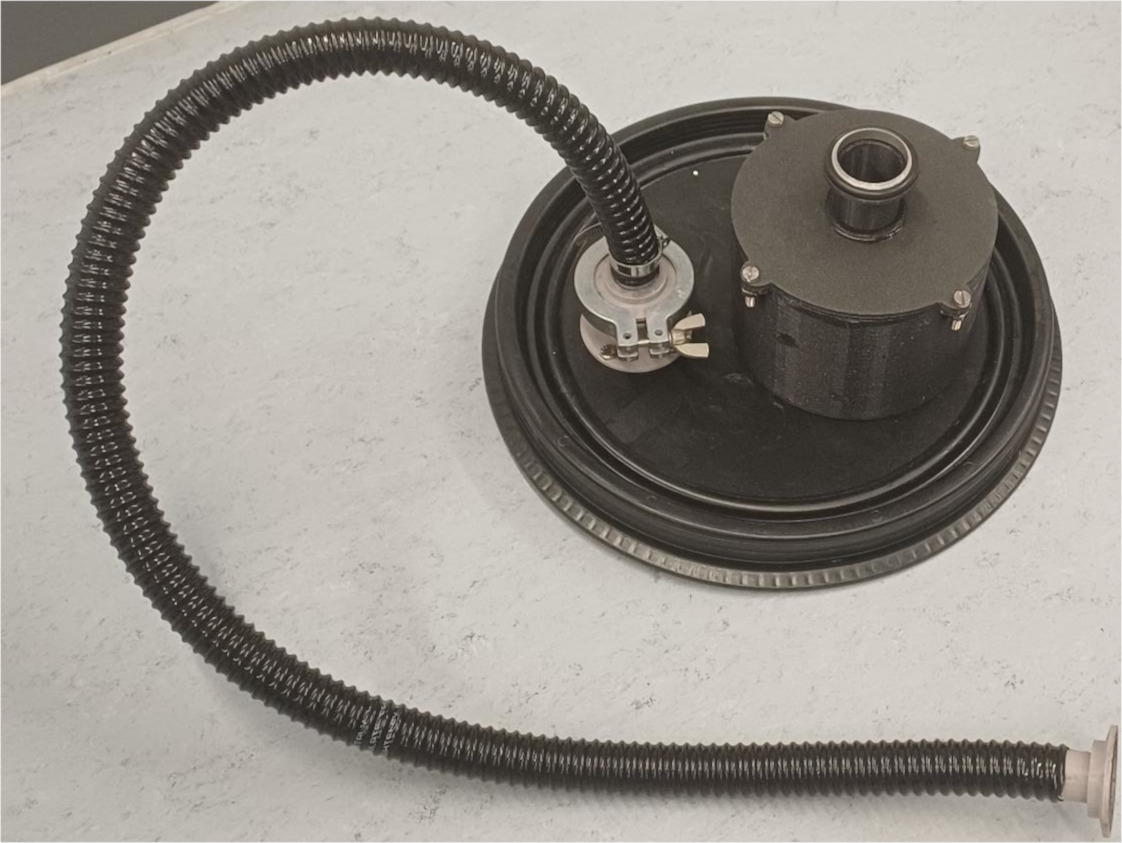
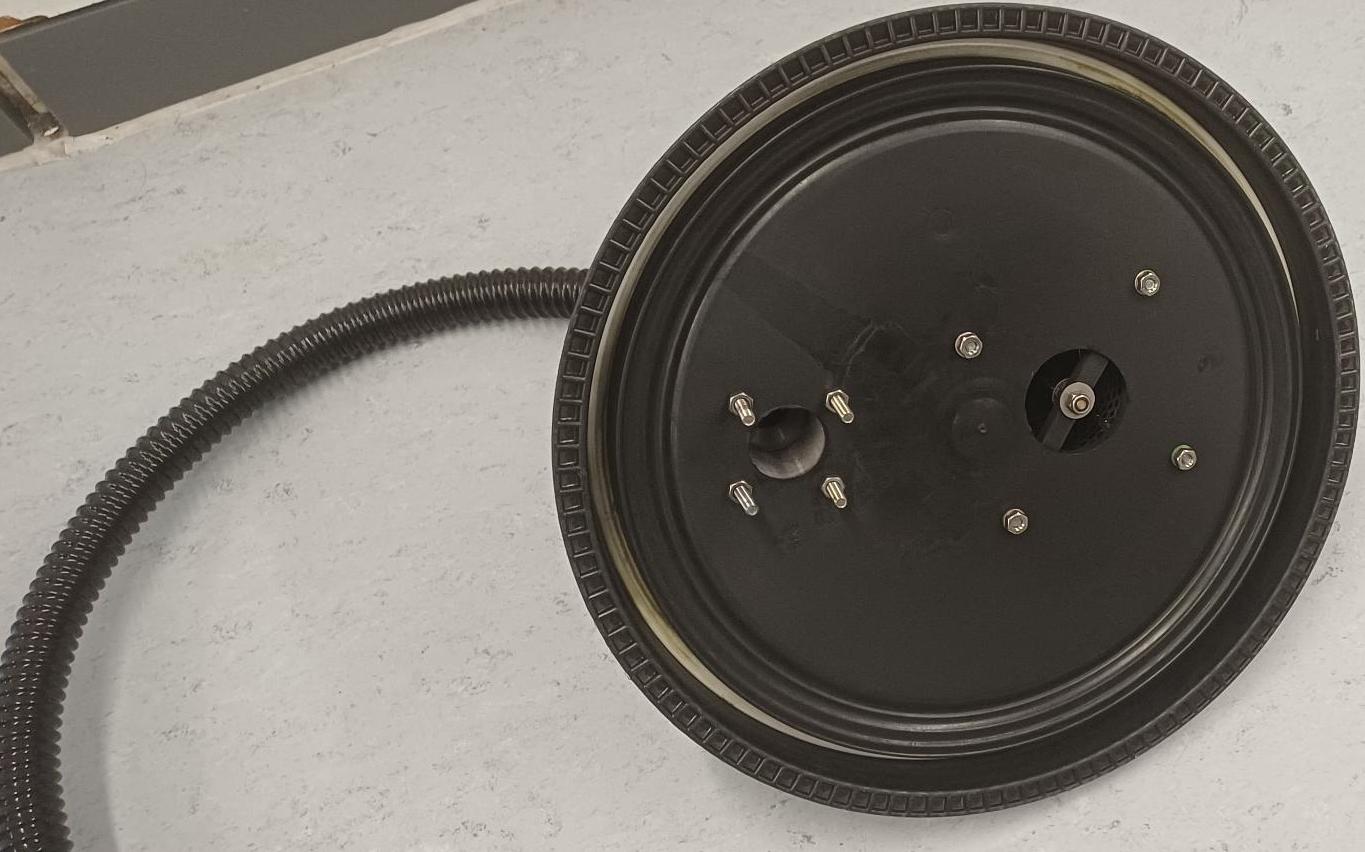
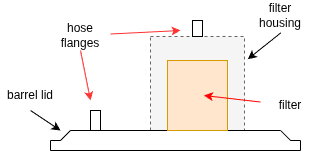
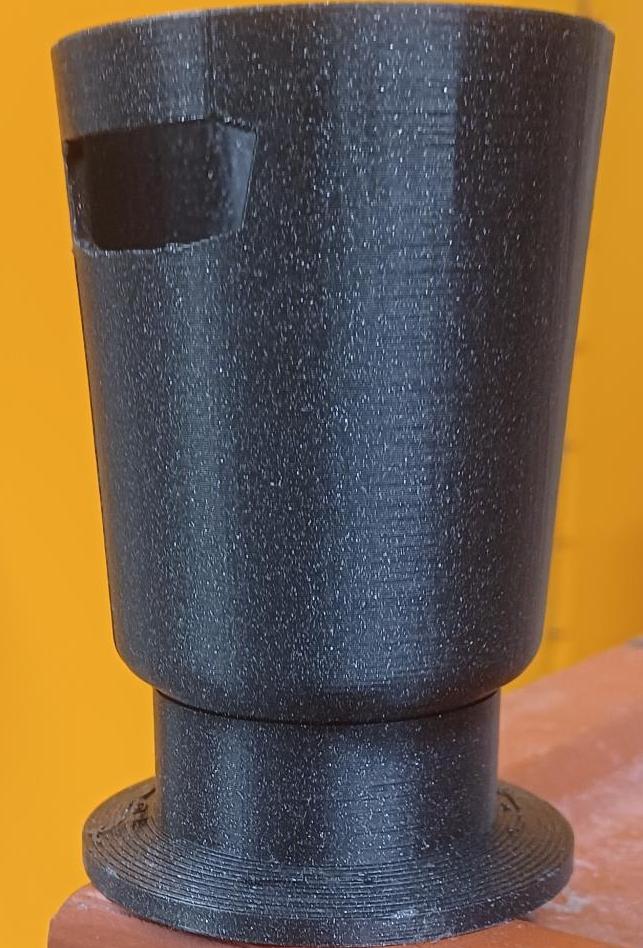
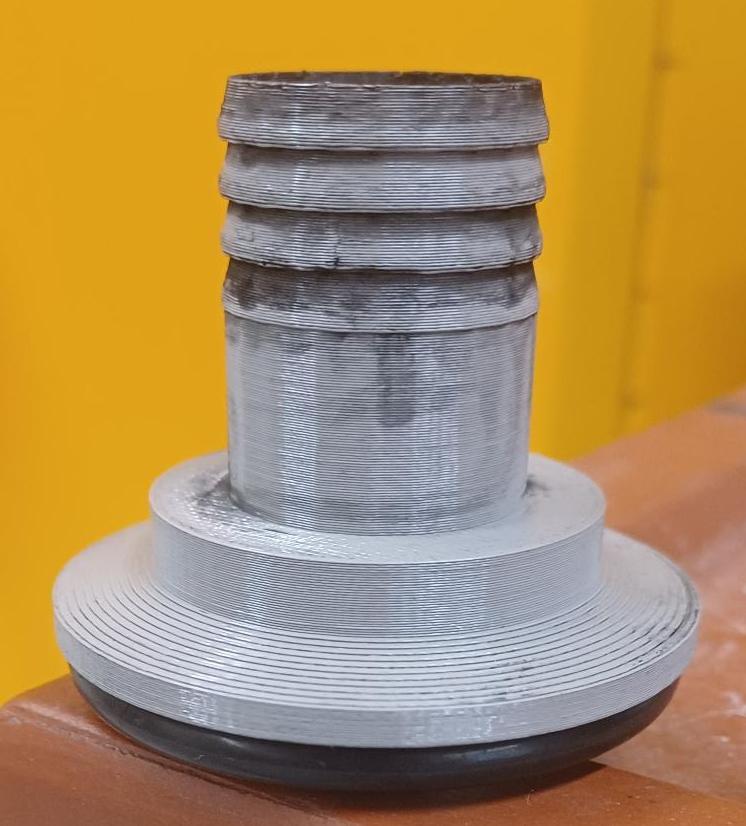
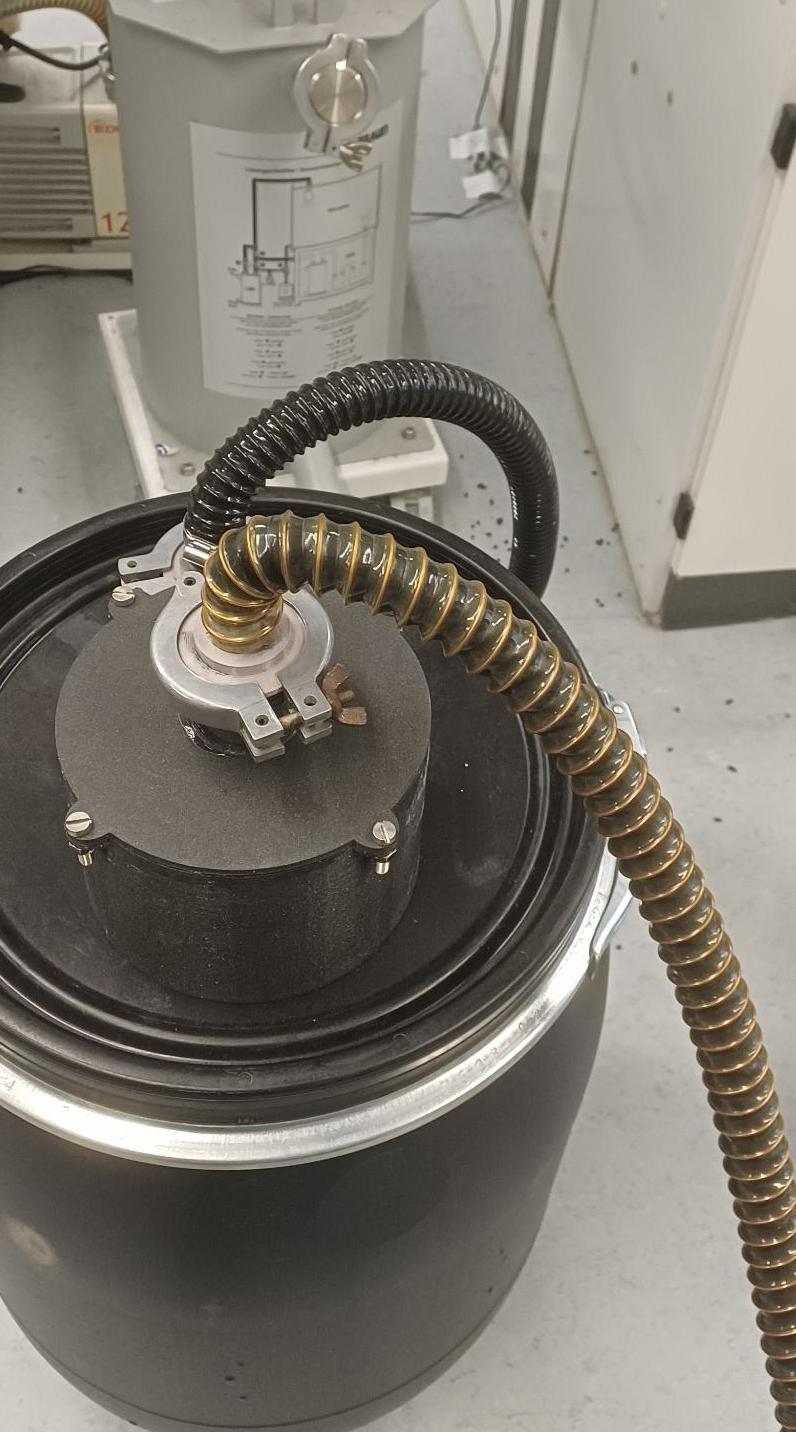
There are two holes cut into the led. One is equipped with a flange and a hose adapter for a 25 mm inner diameter hose. The second hole is equipped with a filter housing to hold back any dust from the carbon pellets. The filter inside is a standard model from the automotive sector (MANN-FILTER C1112). On top of the housing again is a flange with a hose adapter to guide the air into a fume hood. The idea is now to connect the vacuum cleaner (blow mode) to the upper flange of the solvent filter while the lower flange is connected to the intake flange of the modified barrel lid on a barrel (Figure 4).
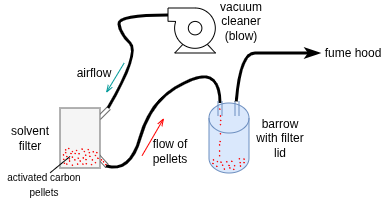
For this method a vacuum cleaner is used as well but in a different manner. Some models allow the hose to be switched to the back so it can be run in a blowing mode. By blowing the pellets out of the filter no absorbed solvent fumes can come into contact with the motor of the vacuum cleaner.
The adapters and the filter housing were 3D-printed and the models are available here
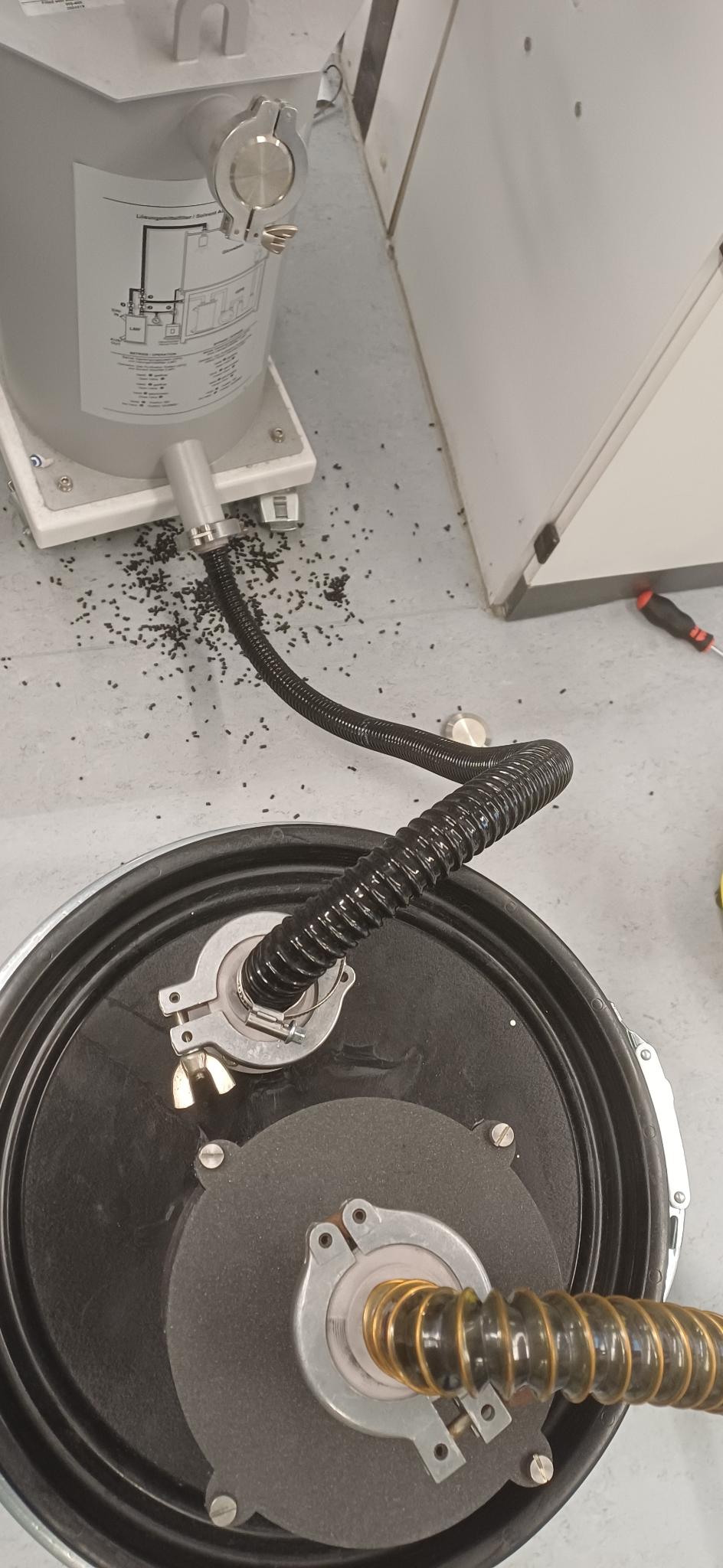
First connect the barrel with the adapters to the lower flange (Figure 6(a)). Be quick when attaching the adapter with the hose to the lower flange because as soon as the flange is open pellets will start to pour out. It is best to put a small container under the flange. Then attach a house to the exhaust of the filter housing and put the other end into a fume hood or out of a window (Figure 6(c)).
Next the vacuum cleaner has to be connected to the upper flange of the solvent filter using the adapter (Figure 7(a)). Be sure to connect the hose from the vacuum cleaner to its output port (Figure 7(b)).
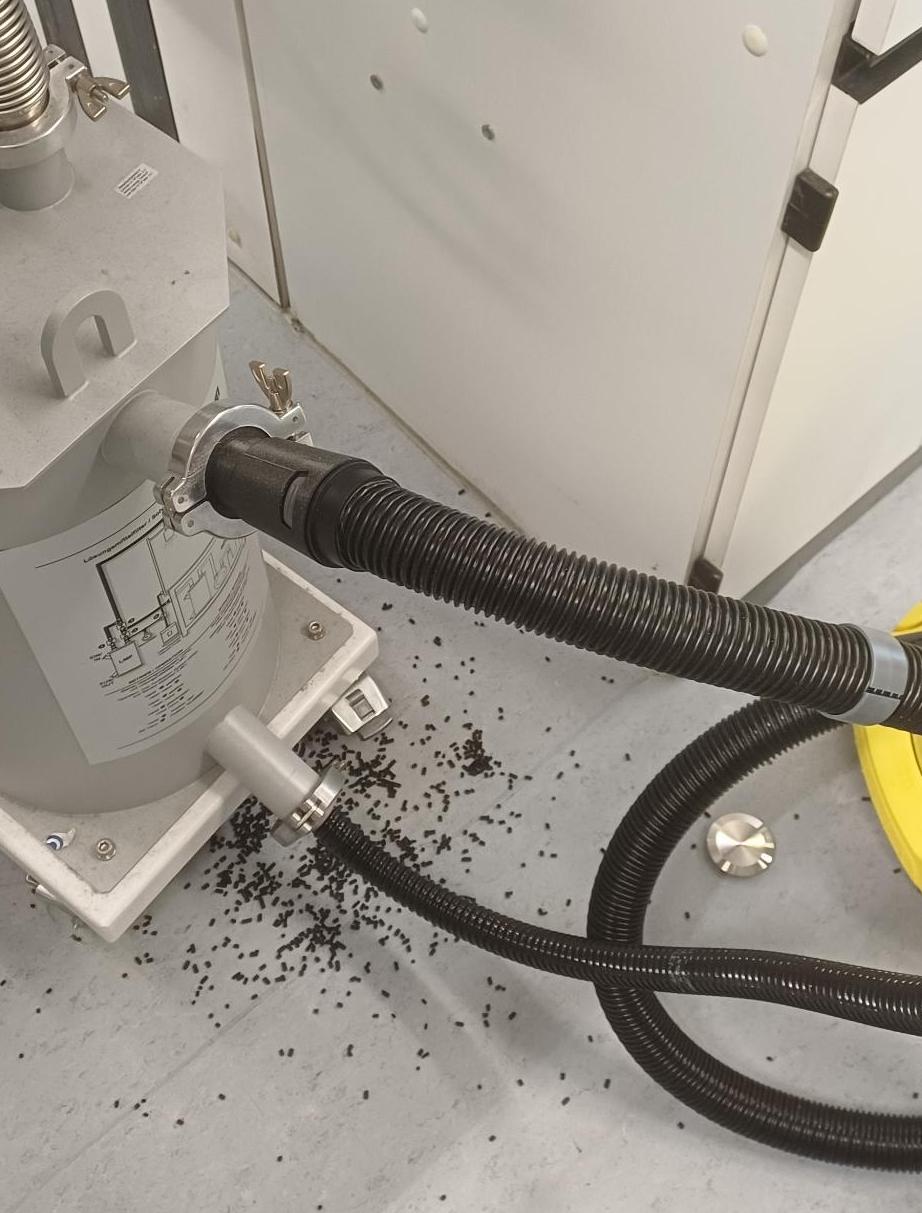
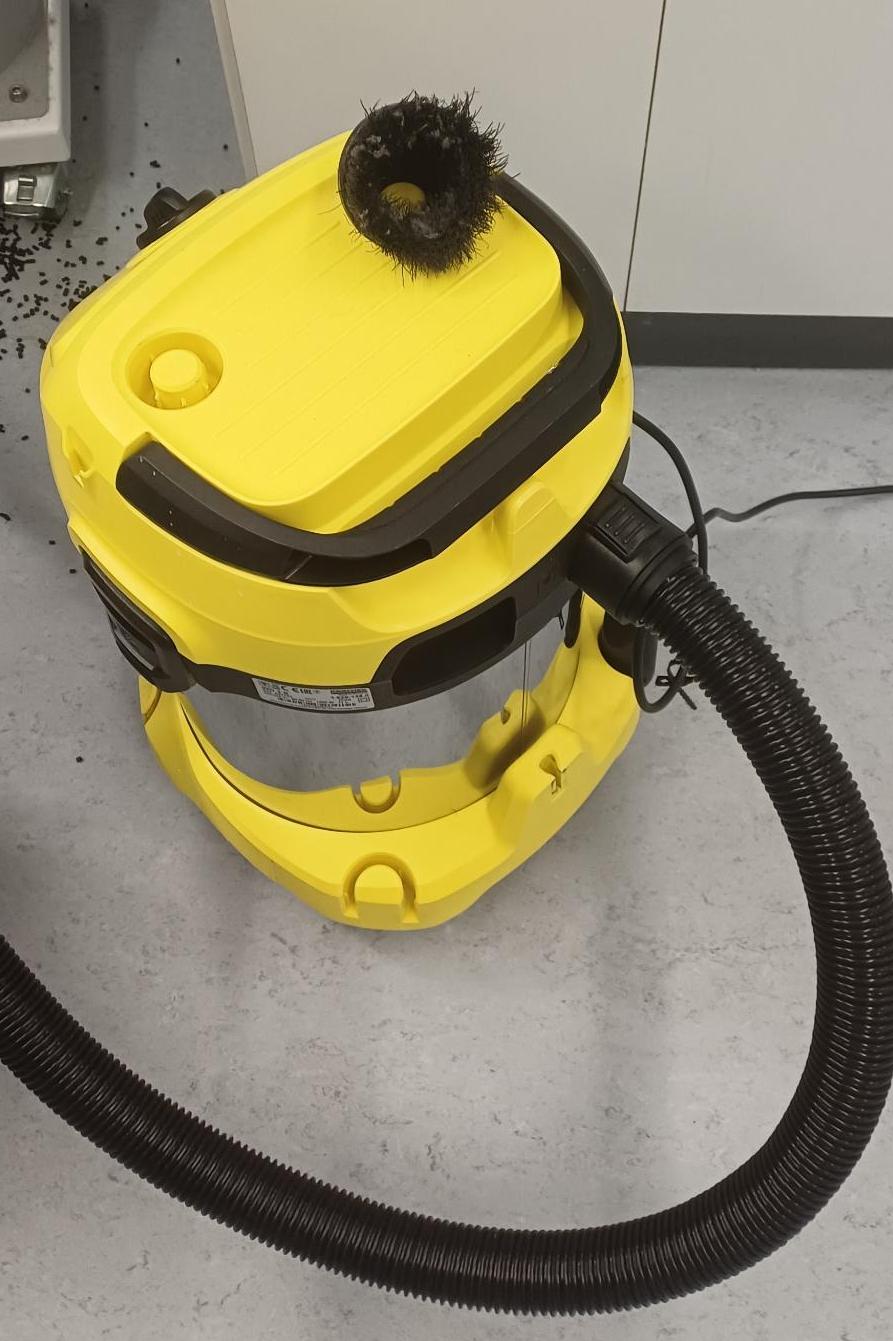
Turn on the vacuum cleaner until all the pellets have been transferred to the barrel. Shake the hose connecting the solvent filter to the barrel to ensure unobstructed pellet flow. If possible, also shake the solvent filter periodically to ensure everything is transferred. The transfer is complete when the noise of the flowing pellets stops.
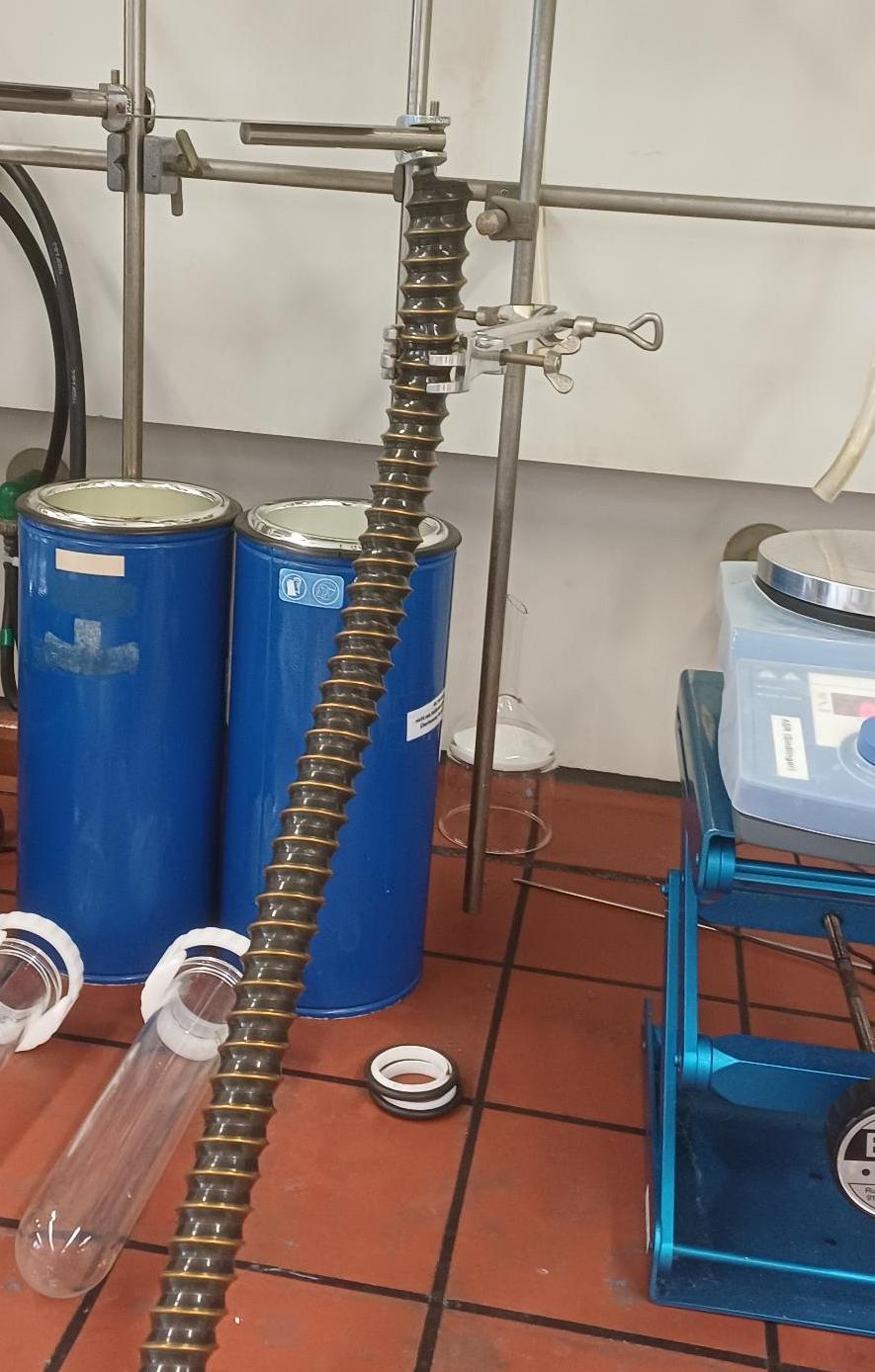
Now the solvent filter is empty it needs to be refilled with fresh pellets. To do so remove all hoses and adapters from the filter. Then change the hose of the vacuum cleaner back into the vacuuming port (Figure 8). Then connect the other side of the hose with the cone-shaped mesh adapter to the lower flange of the solvent filter (Figure 8(b)).
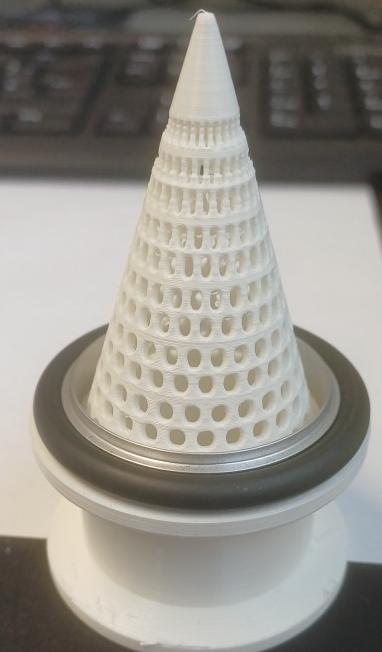
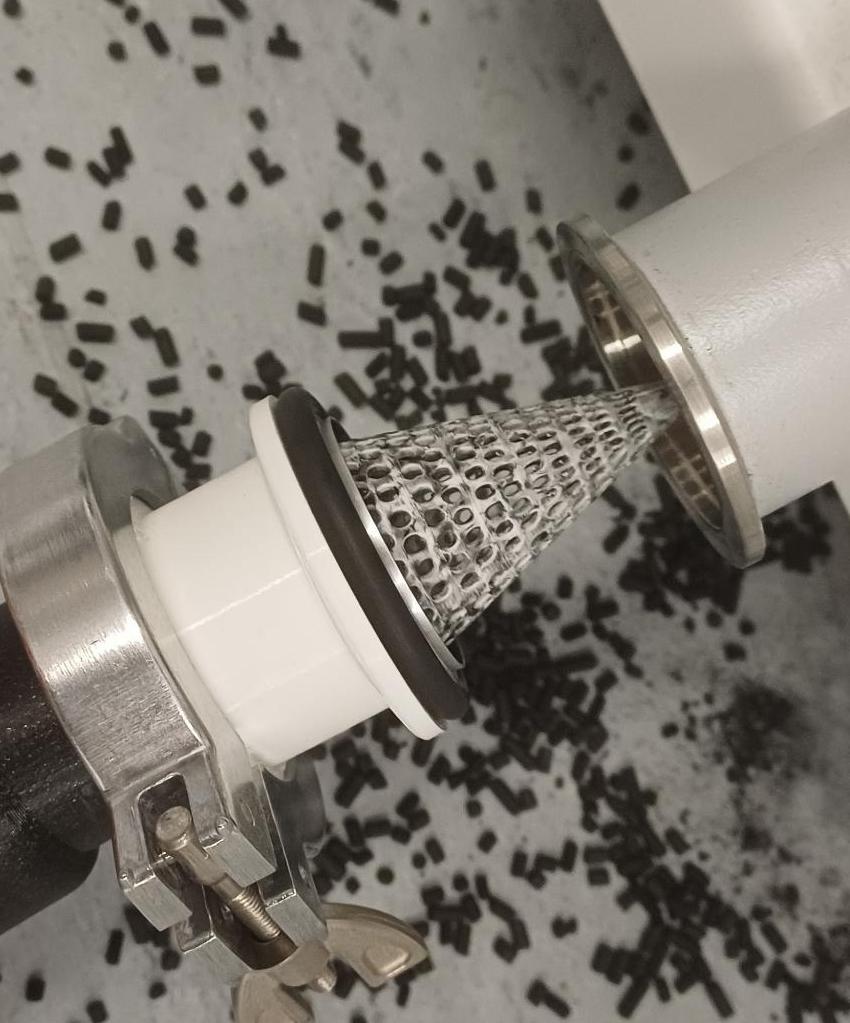
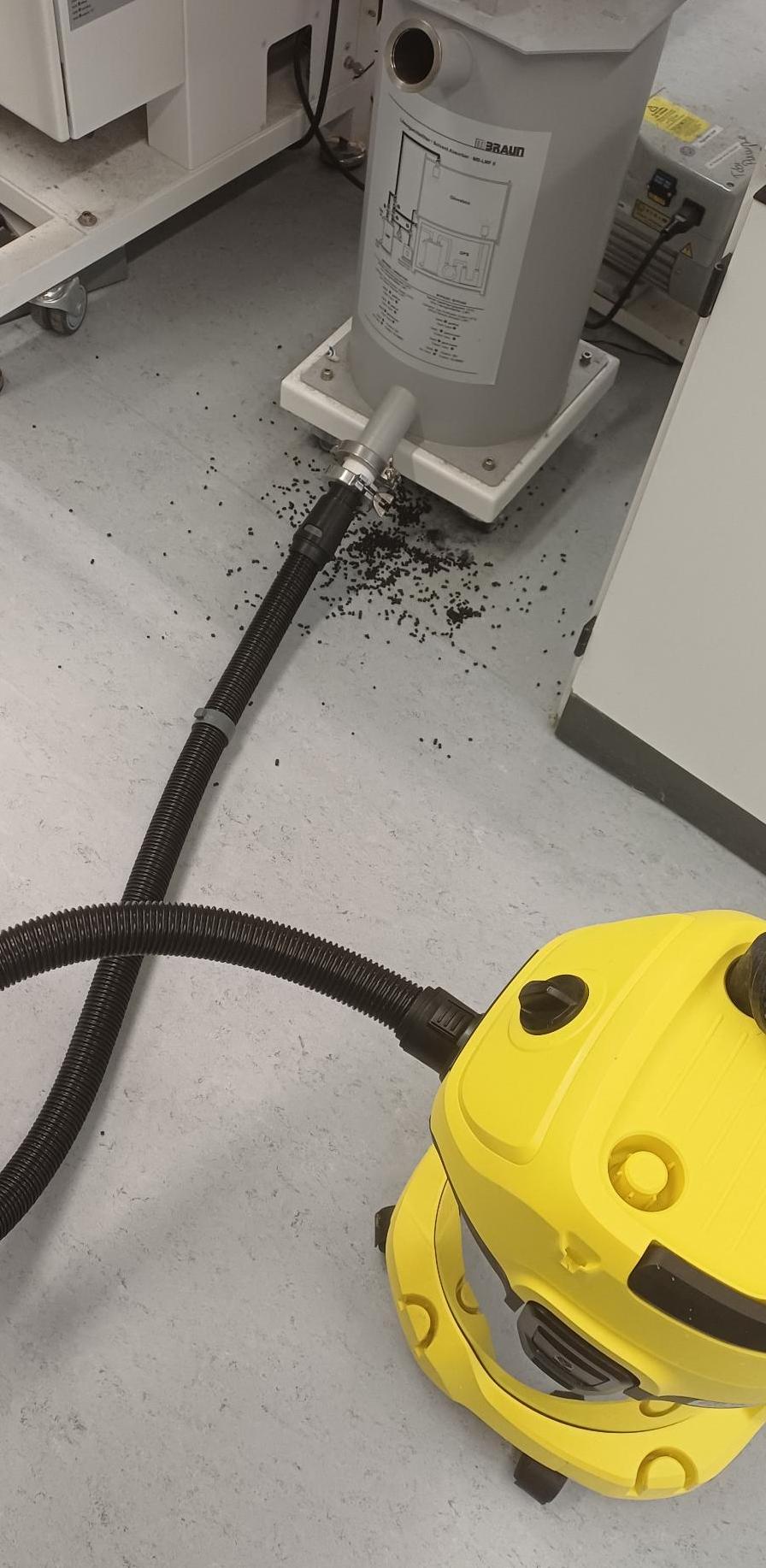
The idea behind this setup is to vacuum the fresh pellets directly from a container into the solvent filter (Figure 9). The cone-shaped mesh adapter (Figure 8(a)) prevents the fresh pellets from being vacuumed into the vacuum cleaner.
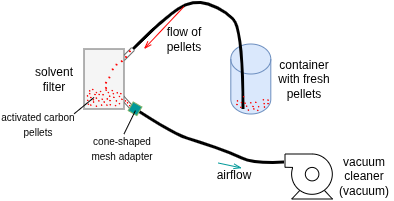
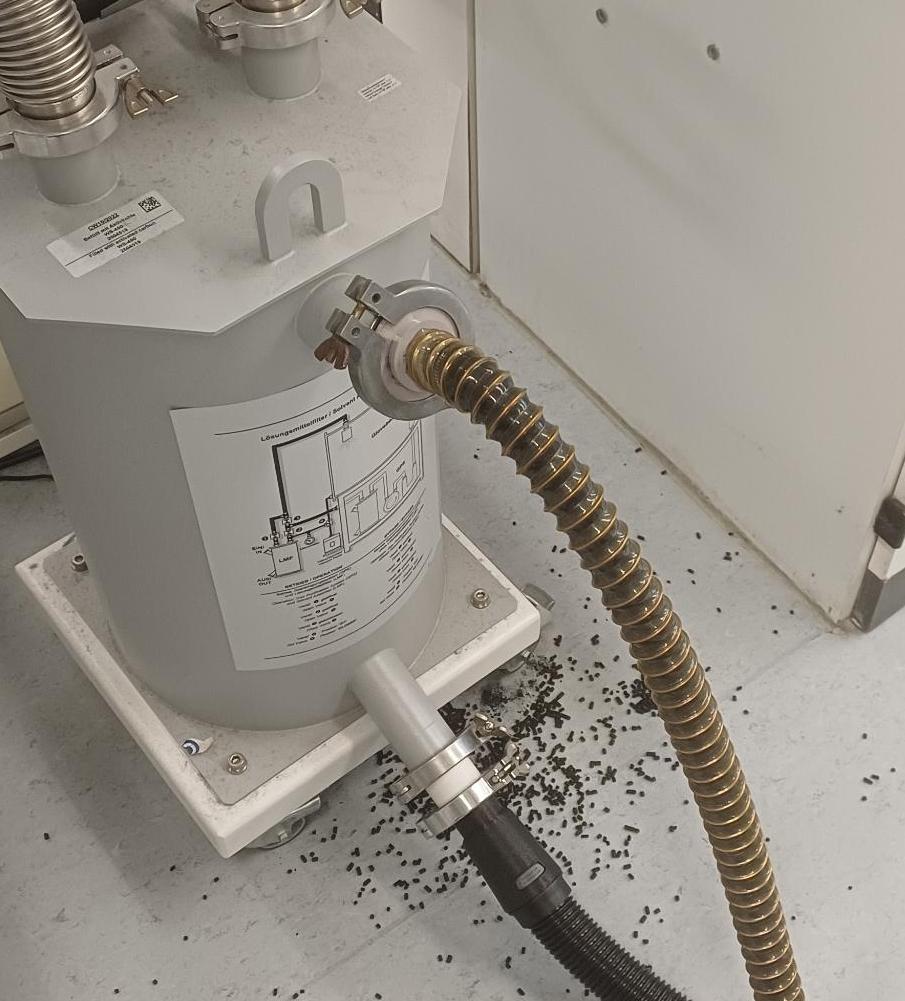
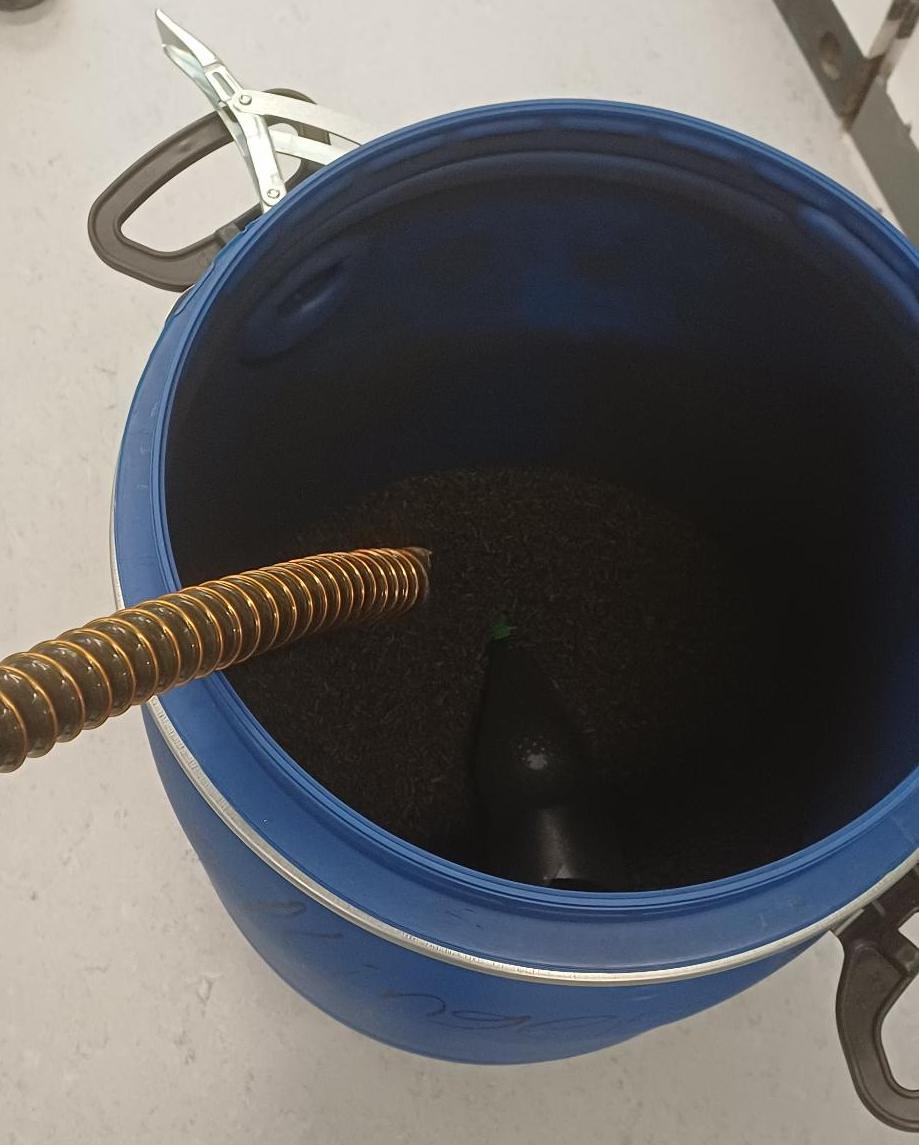
Now the upper flange of the solvent filter needs to be connected with a hose using an adapter (Figure 10(a)). The other side of the hose needs to be hold into a container with fresh pellets (Figure 10(b)). Turn on the vacuum cleaner to vacuum the pellets into the solvent cleaner until its full. Since the fresh pellets are free from solvents it is safe to vacuum them in.
Next remove the hoses from the solvent filter and close it flanges with their respective plugs. Again be quick to remove the cone-shaped mesh adapter since the pellets will start to pour out.
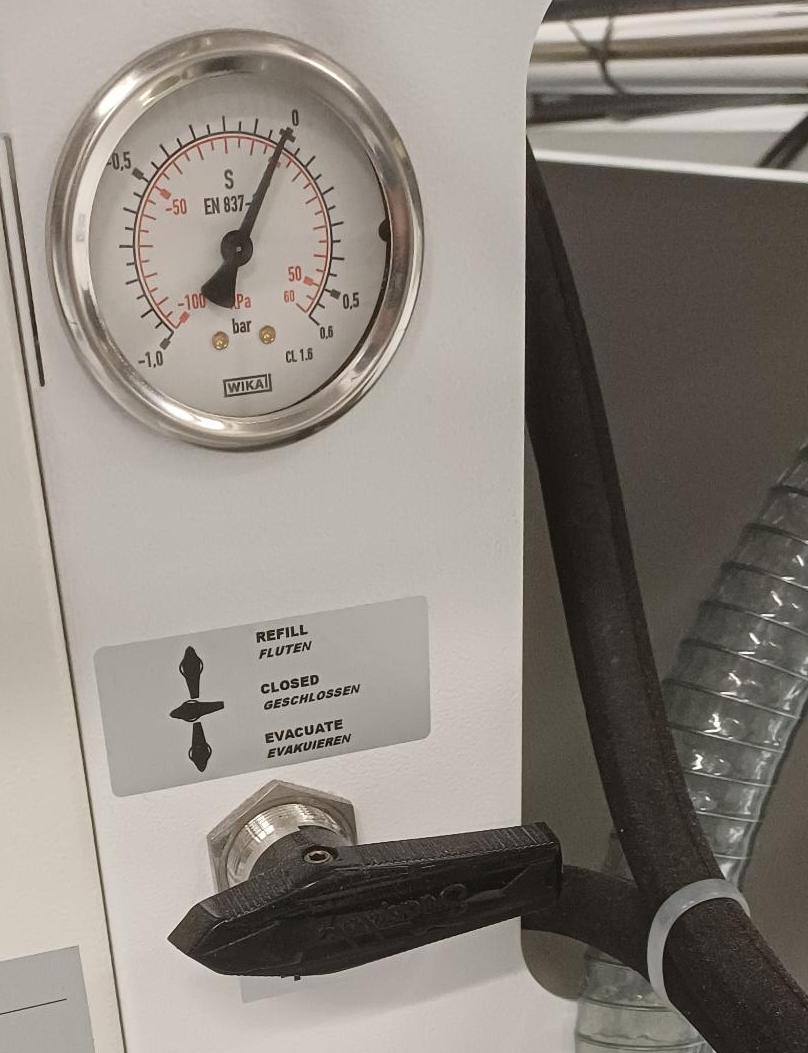
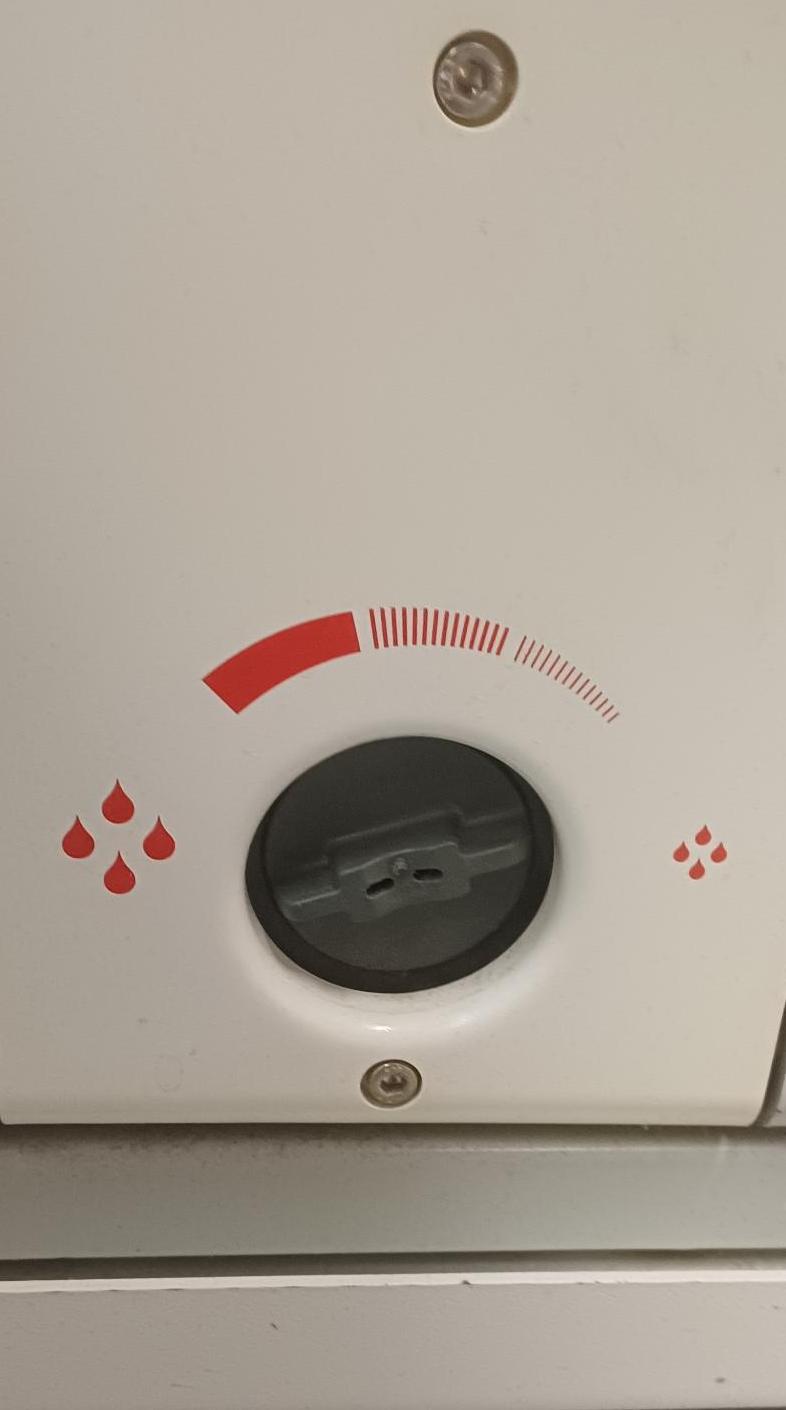
After refilling the solvent filter, it must be evacuated for several hours and then refilled with inert gas. This is necessary not only to remove the air inside the filter, but also to remove the high water content absorbed by the activated carbon. Manufacturers recommend two 9-hour vacuum sessions before putting the filter back into circulation. In my experience, leaving it on vacuum over the weekend also works. To do so, switch the lever on the three-way valve to the vacuum position (Figure 11(a)). To refill the filter with inert gas, switch the lever to the appropriate position. When the filter is inertized, close the valve by switching the lever to the middle position. Some of the water absorbed by the activated carbon will condense on the exhaust side of the vacuum pump. To prevent this, it is recommended that you switch the pump to high throughput mode by turning the knob completely to the left (Figure 11(b)). For more details, consult the pump's manufacturer's manual. After the vacuum cycles are complete, switch the pump back to high vacuum mode by turning the knob completely to the right. If possible, leave the pump in gas ballast for several hours to flush out any remaining moisture.