
Maintenance of the moisture sensor
The most common type of moisture sensor used in glove boxes has a probe head covered with a layer of phosphoric acid. The phosphoric acid deteriorates over time, which is why it needs to be renewed regularly (approximately every 2,000 hours). One of the manufacturers has created an instructional video (external link) on how to do this. In short, the phosphoric acid must be rinsed off with distilled water. Then, after drying the probe head, it is impregnated again with new phosphoric acid.
How does it work?
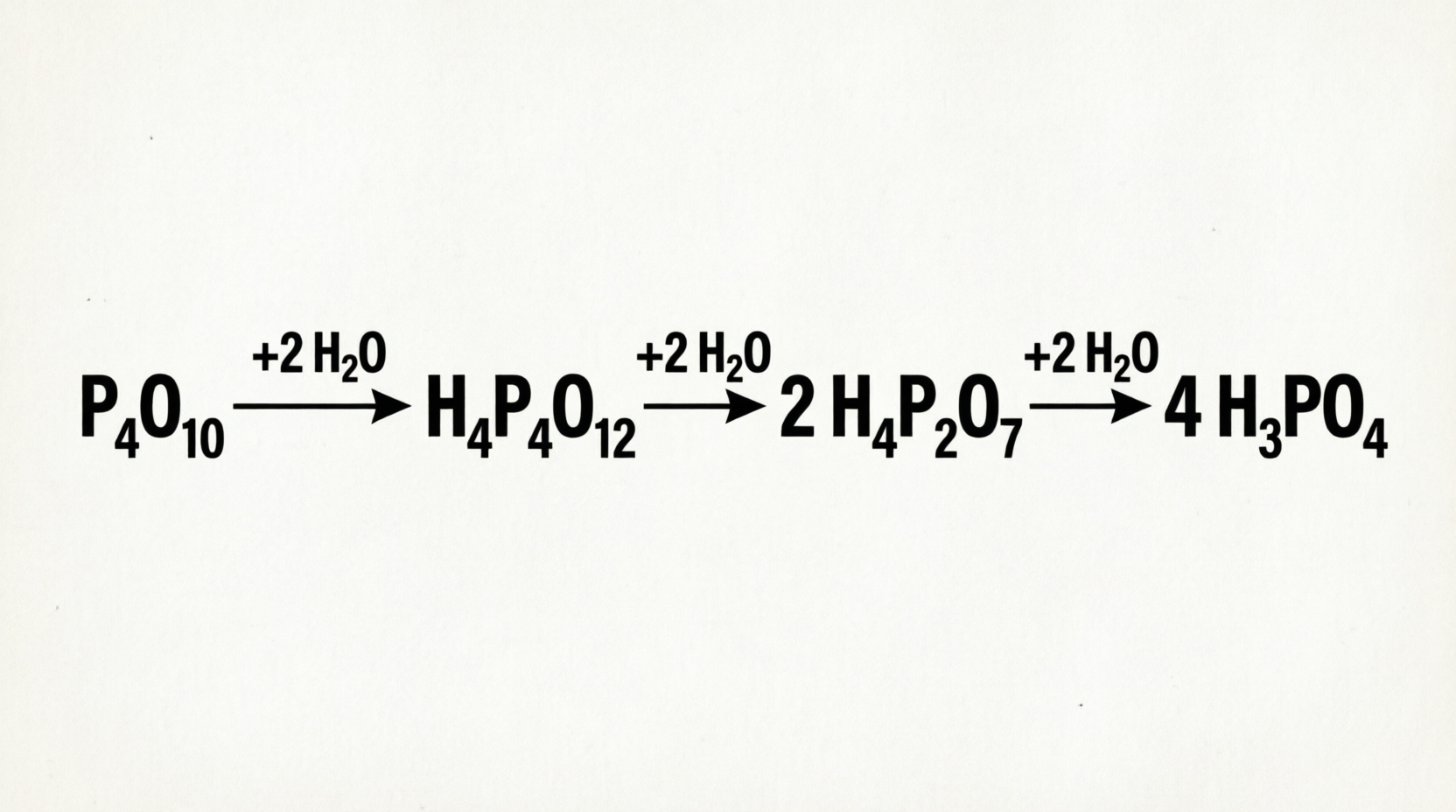
The principle behind this sensor is based on the fact that P2O5 (or better P4O10) is extremely hygroscopic - one of the most hygroscopic substances there is. 1) This means that all the moisture is basically absolutely absorbed into. P4O10 then forms polyphosphoric acids with water until phosphoric acid (H3PO4) is reached.2)
Therefore the probe head (Figure 2) is impregnated with phosphoric acid. The probe head is a ceramic cylinder with conductive traces deposited onto it (Figure 2).
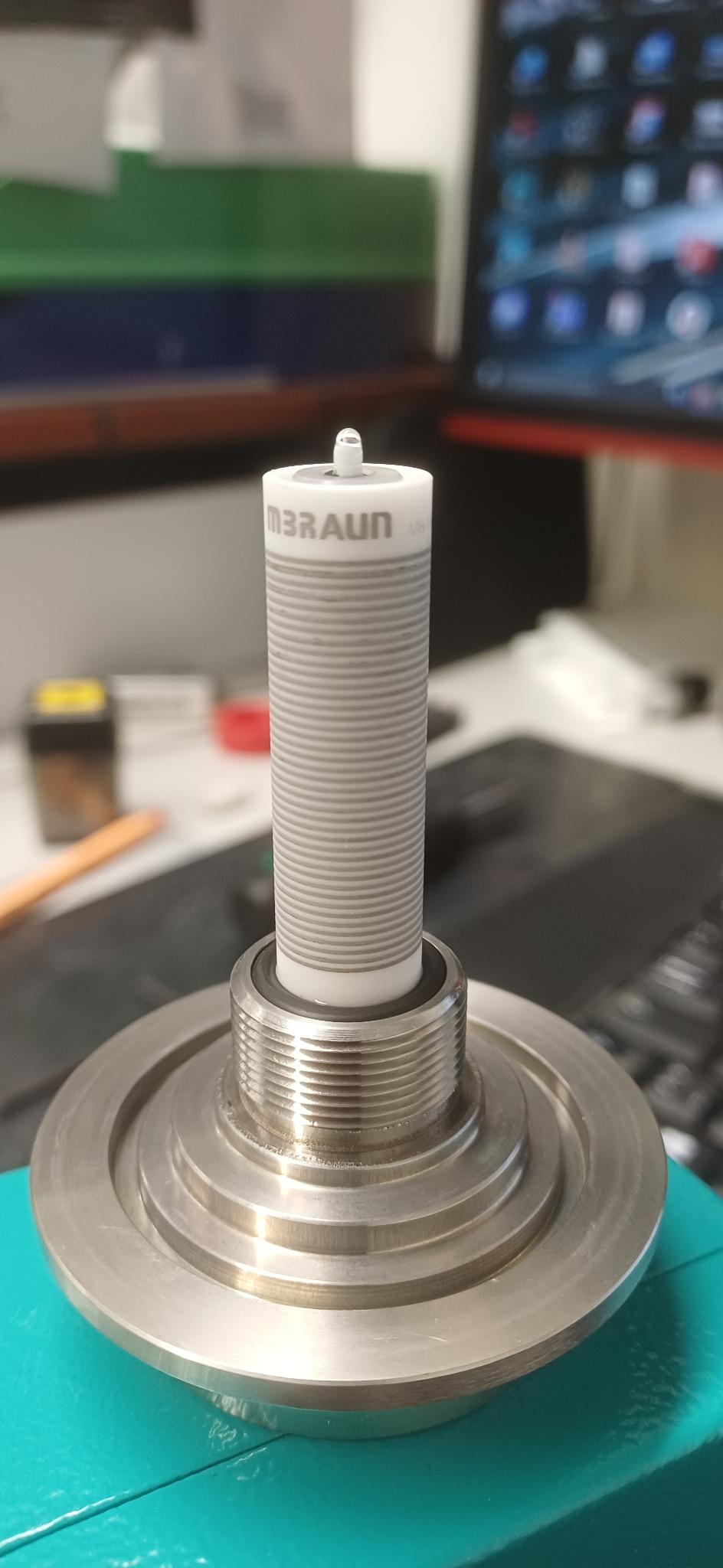
Each one of this conductive traces acts as an electrode with alternating polarity next to each other. By applying an electrical voltage to the electrodes the phosphoric acid, or better the amount of water it contains, is broken down via electrolysis into oxygen and hydrogen (Figure 3).3)

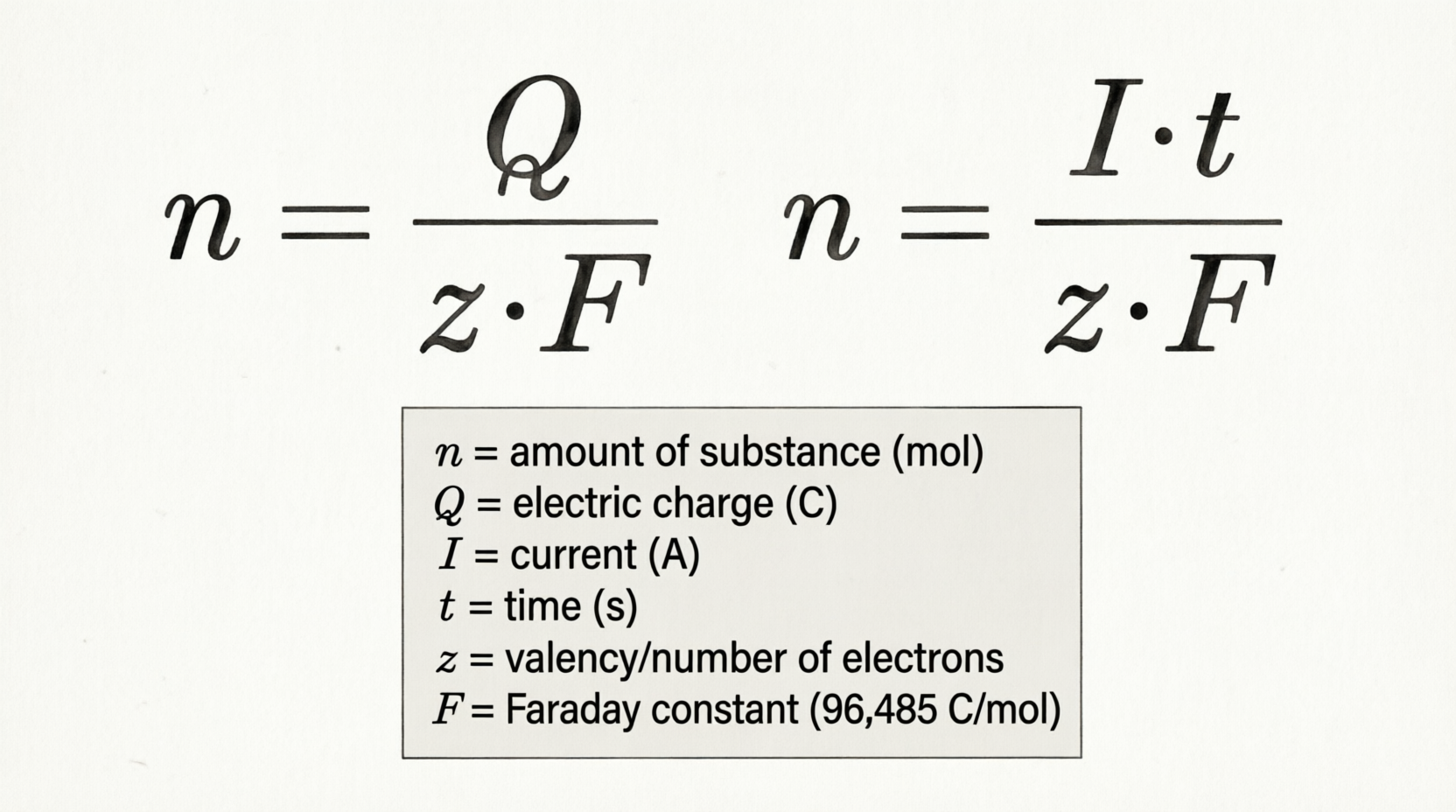
The electric current flowing in this electrolysis can be measured by using an ampere meter (A). According to the Faraday law the current I is proportional to the amount of substance n converted at the electrodes (Figure 4). This enables the possibility to determine the moisture in a system down to the ppm level.
The probe head needs a constant flow of gas to work correctly. A standing atmosphere over the probe head will inherently dry itself and therefore provide false data.
Basic gases and fumes will form phosphates with the phosphoric acid (e. g. amines). This leads to the deterioration of the acid which is the reason why the sensor head needs to be cleaned and impregnated with fresh acid on a regular basis.